How to Organize Your Work Orders to Improve Response Times and Operational Control
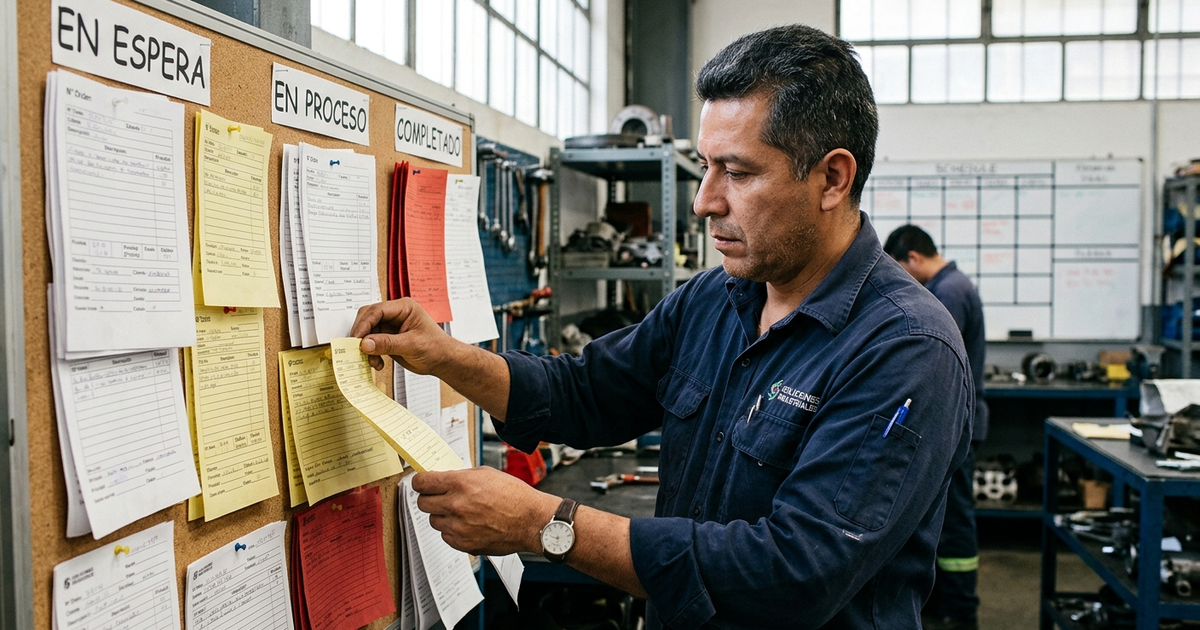
In many companies, work orders are still handled informally. They come in through WhatsApp, phone calls, emails, paper notes, or scattered messages between departments. The problem is not just disorganization. The real issue is that when requests are not centralized, operations lose visibility, important tasks get delayed, and the team ends up working in reaction mode instead of following a clear process.
For maintenance, operations, or facility management leaders, organizing work orders is not an administrative detail. It is a practical way to improve response times, reduce mistakes, and regain control over what happens every day in the operation.
What a work order is and why it matters
A work order is the record of a task that must be performed within an installation. It can include the reported issue, priority, location, assigned technician, required materials, date, status, and outcome of the intervention.
When this process is properly managed, it stops being just a task list. It becomes a tool to coordinate the team, track progress, measure response times, and ensure that every intervention is clearly documented within the context of the relevant installation.
What happens when work orders are disorganized
- Requests get lost: when they come in through multiple channels, some tasks go without follow-up.
- There are no clear priorities: the team responds based on perceived urgency rather than real criticality.
- Traceability is weak: it becomes hard to know what was done, who did it, and what status each task has within each installation.
- Efforts get duplicated: two people may end up working on the same issue without knowing it.
- Reporting becomes slow and manual: gathering information for management or audits takes unnecessary time.
Why organizing this flow improves the whole operation
Work orders are one of the most visible layers of daily maintenance. If that flow is broken, the rest of the operation suffers too. But when work orders are centralized and correctly assigned to installations, the improvement is immediate: more order, better follow-up, and less dependence on scattered messages or human memory.
- Faster response times: every request enters a system that is visible and actionable.
- Better technician assignment: you can distribute tasks based on priority, availability, or job type.
- Clearer follow-up by installation: every work order has a status, owner, and context tied to the place where the work happens.
- Better communication across teams: maintenance, operations, and supervisors work from the same information.
- A foundation for measuring and improving: once data is centralized, it becomes easier to identify bottlenecks and optimize response times.
It is not just about logging tasks
One of the most common mistakes is thinking that a work order is only useful for record keeping. In reality, when used well, it also helps organize execution, improve prioritization, standardize interventions, and build operational history by installation. It is a tool that connects the technician’s daily work with the visibility managers need to make better decisions.
That is why when a company improves its work order process, it does not only gain order. It also gains responsiveness, predictability, and a much more professional operation.
How a CMMS like Leonix solves this
With a CMMS like Leonix, work orders stop living in scattered channels and start being managed from a single platform. Every request can be logged with context, assigned to the right person, updated in real time, and linked to the corresponding installation.
This helps the team work with more clarity, gives managers real visibility into operational status, and allows the company to move beyond informal tracking through chat, paper, or separate spreadsheets.
Conclusion
Organizing work orders is not just about organizing tasks. It is about organizing the operation. When every request is logged, assigned to an installation, executed, and recorded clearly, maintenance stops depending on daily chaos and starts running with greater control.
A system like Leonix helps you centralize that flow, improve response times, and turn daily management into a process that is more visible, more traceable, and easier to scale.