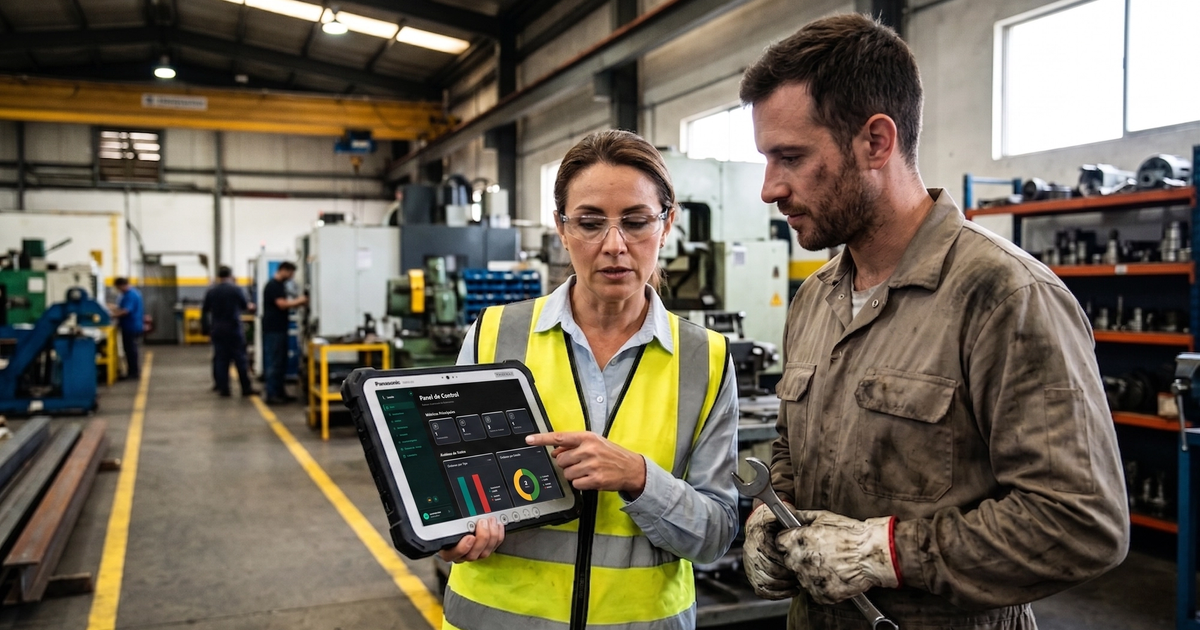
Why Maintenance History Is Key to Reducing Failures and Gaining Operational Control
In many companies, maintenance history is not truly centralized. Part of the information lives in spreadsheets, part in chats, part in emails, and part only in the heads of technicians or supervisors. The result is usually the same: it becomes difficult to understand what was done on each asset, when it was done, which failures keep repeating, and what decisions should be made to avoid future issues.
When there is no clear traceability, maintenance stops being a controlled operation and starts depending on memory, urgency, and manual follow-up. That is why having an organized maintenance history is not just an administrative detail. It is an operational foundation for reducing errors, responding faster, and managing with better judgment.
What maintenance history is
Maintenance history is the complete record of everything that has happened to a piece of equipment, facility, or asset over time. It includes inspections, preventive tasks, corrective repairs, spare parts used, technical observations, dates, responsible personnel, and the outcome of each intervention.
When managed properly, this history helps you understand the real behavior of each asset. It is not just about storing data. It is about turning every intervention into useful operational information.
What problems appear when you lack traceability
- Failures repeat without learning from the past: if you do not know what happened before, every issue gets analyzed from scratch.
- Time is lost searching for information: technicians and managers have to review chats, files, or ask other people.
- The operation depends on key people: when someone is absent or leaves, part of the operational knowledge leaves too.
- It becomes harder to justify decisions: without historical evidence, it is more difficult to prioritize replacements, purchases, or preventive maintenance.
- Audits and reports become more difficult: gathering scattered information takes time and increases the risk of mistakes.
How your operation improves when you centralize maintenance history
Centralizing maintenance history changes the way daily operations are managed. Every asset gains context. Every work order leaves a trace. Every intervention adds information that helps you make better decisions.
- More traceability by asset: you can quickly see what was done, when, by whom, and with what result.
- Better analysis of recurring failures: you identify patterns and can act before the problem happens again.
- Better maintenance decisions: history helps define whether it makes more sense to repair, replace, inspect more often, or change a procedure.
- More order across the team: everyone works from the same information instead of different versions.
- Less dependence on human memory: operational knowledge stops being trapped in people or scattered messages.
Maintenance history is not only useful for looking at the past
One of the most common mistakes is thinking that maintenance history only serves as an archive. In reality, its value lies in how it helps anticipate future decisions. A well-kept history allows better preventive planning, helps detect problematic assets, estimate effort, and improve resource allocation.
In other words, it is not just about knowing what happened. It is about using that information to prevent it from happening again.
How a CMMS like Leonix solves this
A CMMS like Leonix allows you to record and access the full maintenance history from a single platform. Every asset, every work order, and every intervention is linked and available in context. That improves traceability, strengthens team coordination, and turns maintenance into a much more visible and professional operation.
Instead of depending on Excel, WhatsApp, or paper, the information becomes organized, accessible, and ready for daily use. And that not only improves control today. It also improves your ability to grow without losing order.
Conclusion
Maintenance history is not just a record. It is a key tool for reducing failures, gaining visibility, and making decisions with more confidence. When information is scattered, maintenance becomes slower, more reactive, and more dependent on specific people.
Centralizing that information in a system like Leonix helps you build an operation that is more traceable, more organized, and better prepared to scale. Because improving maintenance is not only about doing the work. It is also about understanding it, analyzing it, and learning from it.